
How an Enclosed Storage Box Is Transforming Sign Installation Workflows
 For years, sign installers have dealt with the same daily frustrations—forgotten tools, road-grime on their signs, cramped truck beds, and too many installations lengthened by unplanned trips to Home Depot. As installation work has become more competitive, traditional service trucks simply haven’t kept up with the demands of efficiency.
To become more efficient, many sign companies are switching to the Van Ladder’s Chariot Bucket Truck with its 12’ Workport box — not just bins attached to a flatbed, but real enclosed cargo space functioning as a traveling warehouse. The impact on workflow, efficiency, and employee morale has been amazing.
A Mobile Workspace Out of the Elements
In regions with harsh winters or unpredictable weather, the enclosed box has proven invaluable. Installers who once struggled with signs getting splattered by road grime during transport now store their panels, letters, and faces fully protected inside the truck.
What used to require tarps, towels, or risky open-bed hauling is now a clean, controlled environment. Many crews even use the interior space as a temporary workshop — peeling vinyl, installing new graphics, or making small on-site repairs without fighting rain, wind, or snow. Instead of trying to borrow workspace inside a customer’s business or waiting for the weather to clear, techs simply step inside the box, turn on the lights, and get to work.
Organization That Eliminates the Most Common Installation Slowdowns
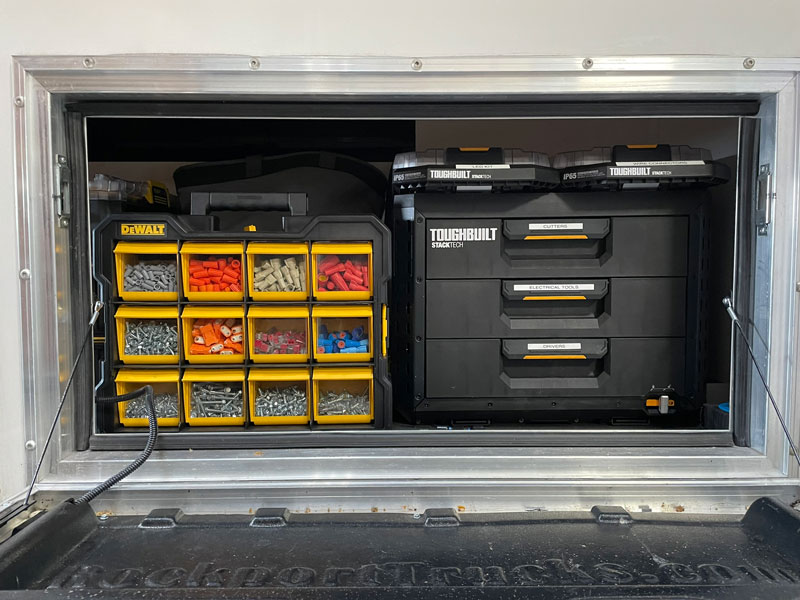
With the Workport box, one of the biggest changes installers report is a dramatic reduction in forgotten tools and supplies. The Workport allows companies to create a clearly defined home for every category of equipment: electrical components, hardware, paint, rigging gear, cleaning supplies, safety equipment, power tools, hand tools, and more.
Instead of digging through tool bags or climbing into cluttered truck beds, crews know exactly where everything belongs. Many shops routinely stock the box at the end of each week — refilling fasteners, checking tool inventory, and preparing for next week’s installs. This consistent organization has virtually eliminated the “Did we bring the…?” conversations that slows down departures in the morning or worse, requires a frantic parts run in the middle of the job.
For companies juggling multiple installers or multiple vehicles, the standardized layout has also ended the problem of tools bouncing between trucks. Everything a crew needs stays with the vehicle, not the person.
Cargo Capacity That Replaces Pickup Beds and Trailers
While organization matters, the raw hauling capacity of the storage box is equally impressive. Sign companies are surprised by how much they can fit inside the project area — from full 5×10 panels to stacks of channel letters, and even long raceways (up to 14’ when slid between the seats).
Companies that routinely used trailers for hauling larger jobs can usually get by with just the truck. Others report that they can load an entire week’s worth of installations at once, separating panels with blankets or cardboard and keeping everything protected and dry.
Installers who were accustomed to “making it work” with pickup beds say the new box feels like stepping into a different category of vehicle — more like a secure delivery van than a traditional bucket truck.
Workflow Improvements That Save Hours Every Week
Having six easily accessible bins paired with 500 cubic feet of storage capacity combines to create one of the biggest benefits of the Workport box: speed.
Many crews say they no longer spend the first hour of the day prepping, working off checklists, checking tool bags, or hunting for missing items. They simply load the signs and go. The reduction in wasted time has been so noticeable that some owners credit the box with freeing up enough time for significantly more installs each week.
On site, the improved workflow continues. Instead of climbing into cluttered truck beds or rummaging through piles of tools, installers have easily accessible compartments on the outside of the truck, lockable with the truck’s key fob. They can grab what they need immediately and keep the job moving. For quick vinyl repairs or electrical fixes, the enclosed box often becomes a mobile repair station.
Installers appreciate “jumping out and getting right to work on the install” — something that was rarely possible with their older trucks.
A Safer, Cleaner, More Professional Install Vehicle
Safety gear is now stored neatly in its own compartments, making OSHA compliance easier. Hard hats, harnesses, cones, extinguishers, first-aid kits are easily accessible.
The difference in truck cleanliness is also noticeable. Owners mention that traditional service trucks often looked like their kitchen “junk drawer” — a bad impression when arriving at a customer site. With a little intention, dedicated storage areas can change that. Installers can now pull up in a vehicle that looks organized and professional, reflecting the quality of the work they do.
For many, the Workport is more than a storage box — it’s a tool for elevating the company’s brand. And it doesn’t hurt that the box becomes a 6’x12’ billboard, advertising their business while showing the world what they can do with vinyl.
What It All Adds Up To: A Better Day on the Job
In the end, installers describe something deceptively simple: the job is just easier now. Days run smoother. Stress is lower. There are fewer interruptions, fewer forgotten items, and fewer weather-related issues.
The storage box has become more than a place to keep things — it’s the backbone of an efficient installation operation. A mobile workshop, a weather shield, a hardware store on wheels, and an organizational system all in one.
For sign companies looking to improve efficiency, reduce downtime, and support their installers, the Workport box may be the most impactful upgrade they can make to their fleet.

