
Subcontracting Installations Versus Owning Your Own Bucket Truck
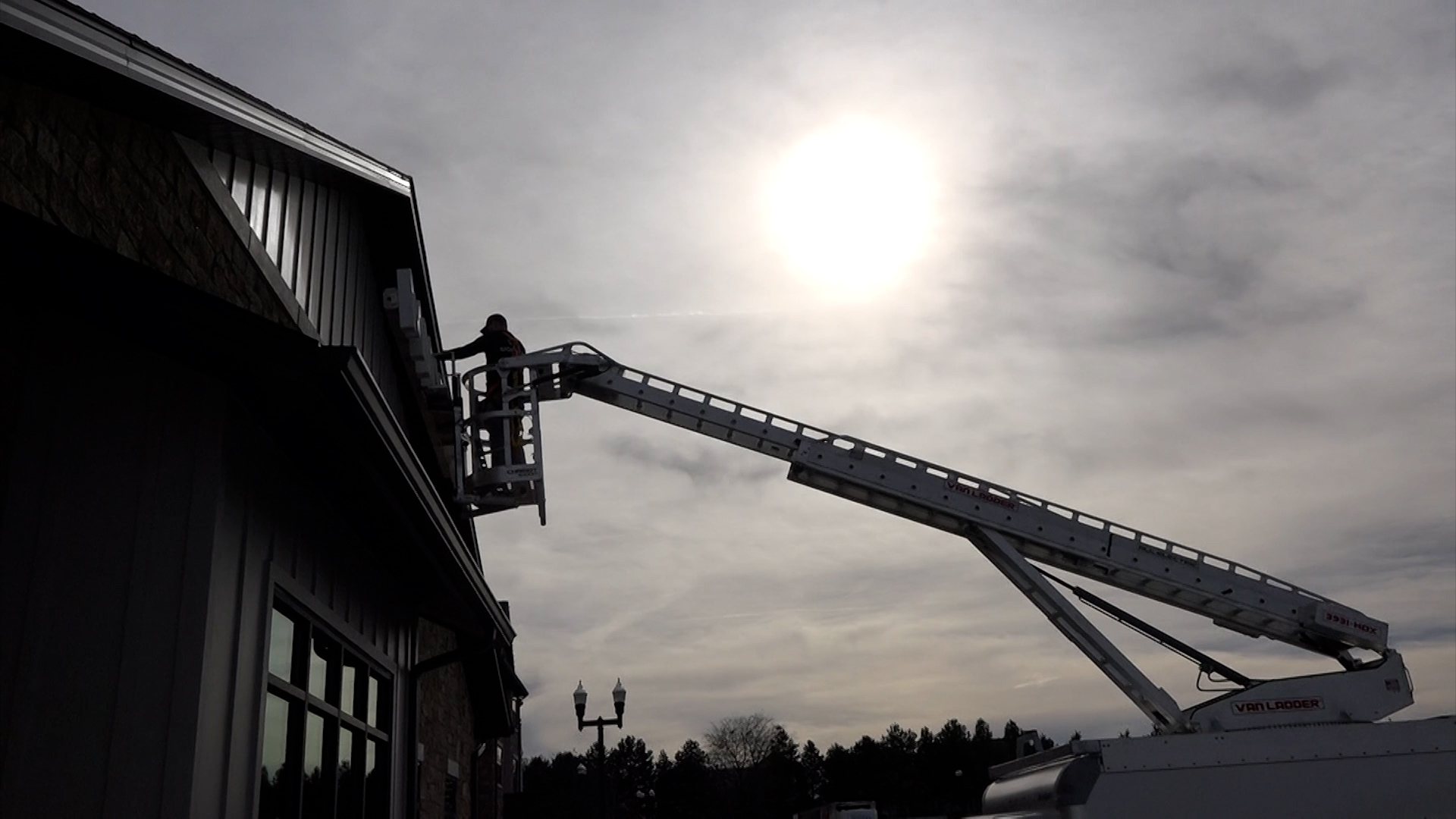
I can’t tell you when to stop subcontracting your installations and take them in-house, but I’ve discussed this topic with hundreds of sign company owners so I’m at least well-versed in the considerations.
Why might you entertain the idea of hanging your own signs? There are several of the reasons frequently shared with us:
- You suspect that you’re leaving too much money on the table by outsourcing what could be a very profitable part of your business.
- You have concerns about the quality of your subcontractor’s work (You don’t want that beautiful sign falling off the building and landing on someone’s car hood).
- You’re tired of your subcontractor’s ever-changing schedule, regularly forcing you to make apologetic phone calls to your customers, “I’m sorry, but he won’t be there today. Hopefully, next week.”
If you’re in any of these boats, perhaps this article will help you sort through some of the pros and cons of doing your own sign installations.
Fixed Cost vs Variable Cost
If you’ve been subcontracting your installations to a third party, you already know the beauty of a variable cost. When there’s no installations, there’s no cost.
Fixed costs, on the other hand, can be your best friend or your worst enemy depending on how busy you are. If you purchase a new bucket truck and finance it with a bank or leasing company, your monthly truck payment will probably exceed $2,000, and hiring an employee to run the bucket truck will cost even more than that. These costs, along with the insurance expenses, are fixed. When you have very little installation work, your fixed expenses won’t change, pulling your profit/loss statement into the red.
But if you’re super busy with installations, you might cover your monthly fixed costs in the first week, making the final three weeks of the month extremely profitable. That’s why it’s important to analyze your records. Historically, how much per month (on average) did you pay your subcontractor? If your projected monthly fixed expenses for doing your own installations exceed what you paid out to your subcontractor, you might be better off farming out your installations until you grow more. That is, unless you have a solid plan for building your installation business once you have the truck along with an installer. For example, if your market is underserved, maybe you can handle installations for other sign companies in addition to your own.
Another strategy for reducing fixed costs when you first start handling your own installations is renting a tow-behind lift on the days you need it. This recharacterizes the lift expense from a fixed cost to a variable cost. Renting a lift by the day carries some frustrations and inefficiencies, though, which I’ll discuss in my next blog.
Venturing Into Sign Service
One often-overlooked benefit of having your own installer and bucket truck is that you can venture into servicing signs (if you have qualified personnel with the proper licensing). Many sign companies use their service division as a prospecting tool to find long-term customers. It doesn’t take long to drive down a city street at night and observe which signs need cleaning or bulb replacements. An email to those businesses the following day with a photo of their sign attached, along with a proposal to fix it, might reel-in customers that you wouldn’t otherwise land. After all, aren’t new sign buyers more likely to give preference to a company that’s providing great service on their old sign?
Hiring an Installer
Good installers don’t grow on trees, and it’s getting harder to find young people who are willing to work both high in the air and in the elements, let alone possess the necessary skills to be a good sign installer. Where do you find these people? Many sign companies start looking in their own shop. Who is better to install a sign than someone who helped make it? Using shop personnel for installations has its pros and cons, though. One big pro is that your installers can be productively engaged in the shop when there are no installations on the schedule. That flexibility recategorizes your installation labor from a fixed cost to a variable cost, helping your installation division become profitable sooner.
On the flip side, using shop personnel for sign installations makes weekly production planning difficult. When your shop foreman loses a portion of his/her crew to off-site installations, it can be challenging to meet customer deadlines.
Following Best Practice for Sales
How does having a bucket truck and an installer help you follow best practice for sales? Based on conversations with many sign company owners, the thing that comes to mind is surveys. Let’s say a prospective customer calls you, asking for a bid on a new sign. Best practice dictates that you turn that quote around within a reasonable time (Let’s say 48 hours). But before you can provide an accurate quote, you need to perform a survey, and to do the survey, you need to get up in the air. So, what do you do? Do you incur the expense of renting a lift in the quote stage? Do you send your salesperson out with a ladder? Do you ask XYX Sign Company to do your survey for you? Or do you stand on the ground and try to guess what’s up there. Do any of these options strike you as best practice?
If you have a bucket truck and an installer, you can usually tackle the survey the same day the quote request arrives. What a great message to the prospective customer; not only are you quick and thorough, but you also have the right equipment. Your quotes will be more accurate, and your quote turnaround will be a fraction of what it was before. Using best practices for quoting invariably leads to more sales and greater profitability.
Getting Credit for Your Work
So, you’ve met with your customer several times to design a brilliant sign that perfectly captures their brand. They give you the go-ahead to build the sign, and your production team knocks the project out of the park (You’re so proud). Now it’s time to install the sign so you call XYZ Sign Company to erect your work-of-art at the busy strip mall. Hundreds of people see the sign going up, and all of them assume that XYZ Sign Company designed and fabricated it. Now you’re irritated (rightly so) because one of your competitors is getting credit for your amazing work.
Being Perceived as a Full-Service Sign Company
We see very few sign companies handling the entire process, from design to installation, by themselves. For instance, maybe you have an affordable and reliable option for outsourcing your channel letters on a wholesale basis. But because fabrication happens inside the shop, no one knows that you’re not making your own channel letters. But installations are different. If you hire another sign company to install your signs, everyone knows you’re not a full-service sign company, and worse yet, they probably think the installing company is.
Does the perception of being a full-service sign company matter? I think there are some benefits. Let me tell you a story: I lost my dad not long ago. Fortunately, he and my mother had preplanned their funerals at a full-service funeral home. Prior to this experience, I didn’t know what funeral homes did. I mean, I knew some of it, but I didn’t know they cancel the deceased social security number. I didn’t know they coach families on how to write an obituary and then supply that information to the newspaper. I didn’t know they plan the meal that follows the funeral. I didn’t know they correspond with the military to obtain the veteran’s plaque for the gravestone. I didn’t know they obtain multiple original copies of the death certificate so I can close accounts. As I bragged up this funeral home to other people, I discovered that not all funeral homes offer this wide range of services. But I can tell you this: It felt great to be in the hands of someone who controlled the whole process competently because, at the time, I was over my head. I think branding is a bit like funeral planning; it’s both expensive and important, but it’s not something most people are familiar with. Business owners want to get it right, but they’re intimidated because they don’t understand the depth and breadth of what building a brand entails. So, it’s comforting to have someone in their corner who can walk them through the whole process from beginning to end. I think that’s worth striving for.
Now, here’s a little Van Ladder commercial: Based on the above discussion points, here are some reasons Van Ladder makes a great first bucket truck?
- Fixed costs – There are no other new bucket trucks designed for sign installations at our price point, and the Chariot Sign Package can tackle virtually any job weighing under 200 lbs. at 45’ and under.
- Sign service – The Workport box has 500 cubic feet of organized storage space, allowing you to bring everything onboard for one-and-done sign service.
- Installer friendly – Van Ladder’s Chariot Bucket comes with specially designed installation tools to help installers perform their job safely and efficiently. It’s much easier to recruit installers when they know you have the right tools for the job. Plus, at a gross vehicle weight of 14,500, candidates don’t need a CDL license.
- Great for surveys – Being lightweight, small, and quiet, the Van Ladder can get in and out of places without disrupting business activities, making it the perfect truck for surveys.
- Getting credit for your work – The 6’ x 12’ box makes the Van Ladder a traveling billboard.
- Being perceived as a full-service sign company – The Van Ladder Chariot Sign package has a unique look, designed exclusively for the sign and lighting industry. It’s state-of-the-art equipment that sends a message.

