From Van Ladder to Chariot: Why Our Name Is Changing
Not long ago, a woman heard the name Van Ladder for the first time. She paused for a moment… and then burst into laughter.

“You guys really lack imagination,” she said between laughs. “That’s more of an observation than a product name.”

Then she lowered her voice and grunted like a caveman.

“Van… Ladder.”

We had to laugh with her. Because, honestly, she wasn’t wrong.

But the story behind that name goes back much further than most people realize—and understanding that story explains why we’re now changing it.

After nearly three decades of innovation, development, and listening to our customers, Van Ladder Bucket Trucks is becoming Chariot Bucket Trucks.

And the reason is simple: the product has become something entirely new.
Where the Name Van Ladder Came From

The truth is, we didn’t name the product.

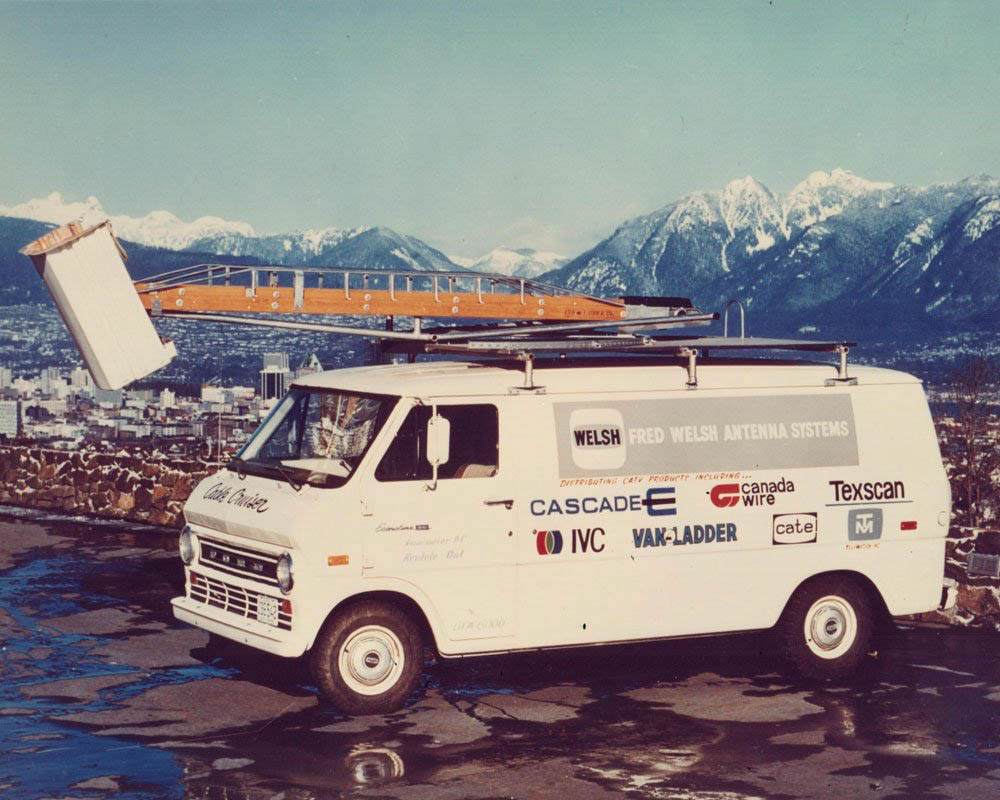
The Van Ladder was invented in 1968 by Eugene Faulstich of Spencer, Iowa. He created it for the cable television industry as a safer way for technicians to reach the tops of utility poles.

Back then, the design was exactly what the name described.

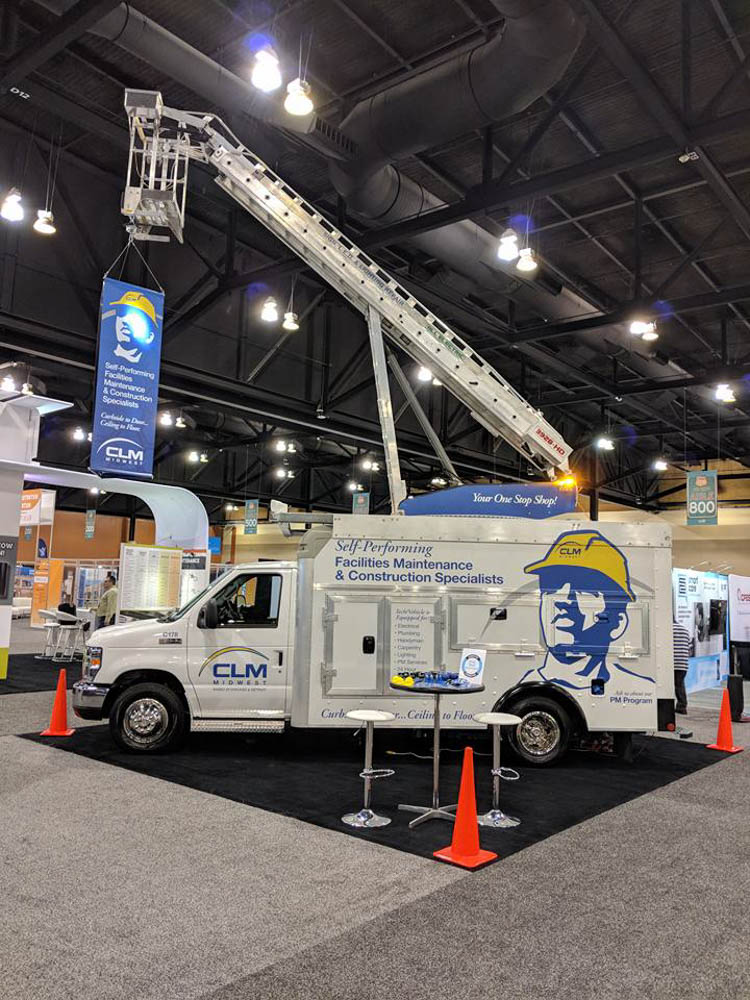
A ladder was mounted to the top of a cargo van. Workers would climb the ladder to access a bucket, allowing them to work safely at pole height.

So, while the name might not win any marketing awards, it was perfectly accurate.

Van. Ladder.

Simple.

Practical.

The Product That Almost Disappeared

Fast forward a couple decades.

Eugene eventually sold the company in the 1980s, but the new owners ran into a brutal economic environment. High interest rates made it difficult for many manufacturers to survive.

The company went bankrupt.

Eugene bought everything back at auction for pennies on the dollar and stored the equipment away. The product sat quietly in mothballs for years.

At the time, none of us knew that story would eventually intersect with ours.

Dave Peterson Enters the Story

That changed in 1997, when Dave Peterson heard about the dormant company through a friend.

Dave wasn’t looking for a bucket truck business.

He was running excavation and ready-mix operations and had spent his entire life around heavy equipment. In fact, his story with machinery started very young.

When Dave was thirteen years old, his father put him behind the controls of a dozer in a gravel pit. The machine was so old it used a small gasoline engine to start the diesel motor.

It took him an entire summer just to learn how to start it.

But by the end of that summer, he could run it.

That early experience began a lifelong relationship with equipment—and with the people who depend on it every day.

Dave grew up working alongside his father, who started an excavation business in 1967 with little more than a backhoe and a pickup truck. If Dave wanted time with his dad, he had to work.

So he did.

By age twenty, Dave had bought the excavating and gravel business from his father and found himself $300,000 in debt in the middle of the 1981 recession.

He moved into a $1,300 trailer house at the gravel pit and worked relentlessly to survive.

Those early years taught him lessons that would shape his philosophy as a manufacturer:

  • Keep your belt tight.
  • Design equipment that lasts.
  • And most importantly—listen to the people who use it.

The Kind of Equipment Company Dave Wanted to Build

Through his years in excavation, trucking, and road construction, Dave bought a lot of equipment.

And buying equipment was often frustrating.

Some manufacturers seemed disconnected from the field. They didn’t listen to operators. They didn’t design for reliability or ease of maintenance.

But every once in a while, Dave encountered companies that did it right.

Companies that built equipment with three clear goals:

  • Best design
  • Highest reliability
  • Lowest cost of ownership

Dave admired that approach.

If he ever owned a manufacturing company, he decided, that’s exactly what he would build.

So, when he learned about the mothballed Van Ladder product in 1997, the idea intrigued him.

He made a deal with Eugene Faulstich to bring the company back to life.

But the challenge was enormous.

The product had been off the market for over a decade.

Technology had moved on.

Expectations had changed.

And the original design needed serious development.

The Hard Years of Reinvention

The early years weren’t easy.

When production resumed, some reliability issues surfaced. Design shortcomings had to be addressed. Improvements had to be made quickly.

Dave and his team did something many companies wouldn’t have done.

They went back out to the field and fixed the equipment already in customers’ hands.

It cost a lot of money.

But it built something more valuable: trust.

Many of those early customers stuck with the company—and many are still customers today.

That experience also reinforced the culture Dave wanted the company to have.

Treat customers like family.

Live by the Golden Rule.

And pursue improvement relentlessly.

A Major Turning Point in Design

Over time, the product evolved dramatically.

To increase the bucket’s weight capacity and improve side-reach, the company pivoted away from standard cargo vans to a heavier chassis with dual rear wheels and a 14,500 lb. GVWR.

The change was nerve-racking at first.

The company had spent years marketing to customers who preferred vans.

But the heavier chassis ultimately opened new possibilities for customers to have a traveling warehouse:

  • Greater payload
  • More cargo space with separate compartments to stay better organized
  • A cavernous project area capable of transporting signage in a protected, enclosed area

What initially looked like a challenge turned into a major step forward.

Listening to the Sign Industry

Another pivotal moment came in 2019 at the International Sign Association Expo.

Sign installers kept telling us something important.

Our lift was fantastic for servicing signs.

But it wasn’t ideal for installing them.

At the time, the bucket didn’t rotate. Installers had to park perfectly square to the wall to line up a sign correctly.

That feedback sent our engineering team back to the drawing board.

They worked tirelessly to develop an articulating system between the ladder and the bucket—but they kept running into obstacles.

Finally, one day during prayer, Dave asked for help.

And the idea came.

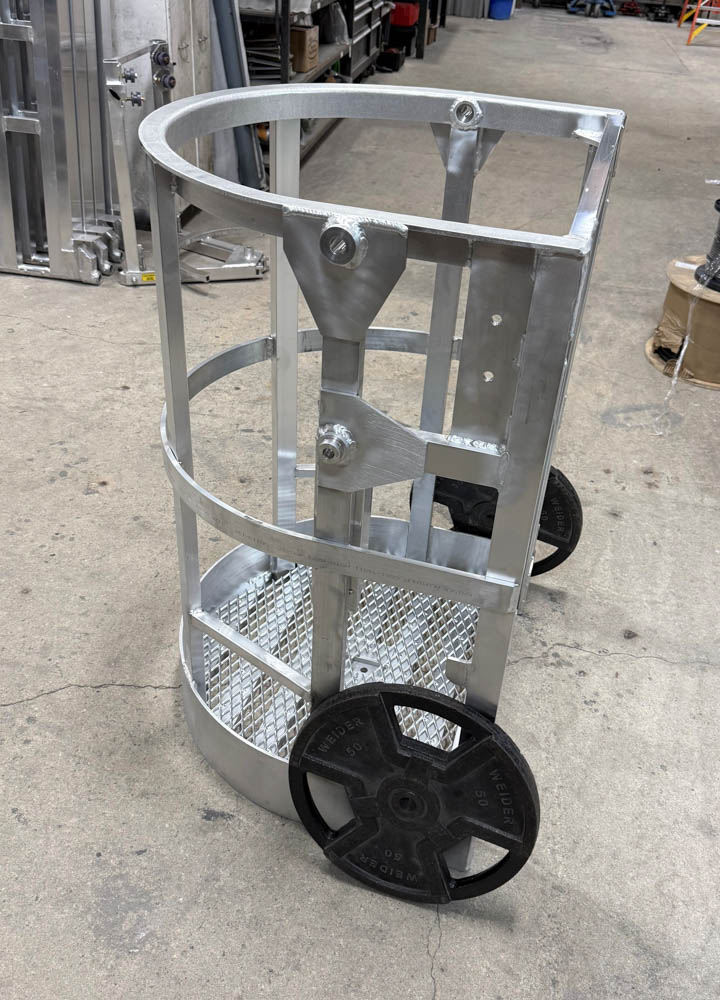
He pictured himself standing in a bucket with a rounded front. Beneath his feet, forks rotated around the circumference of the bucket like a giant lazy Susan.

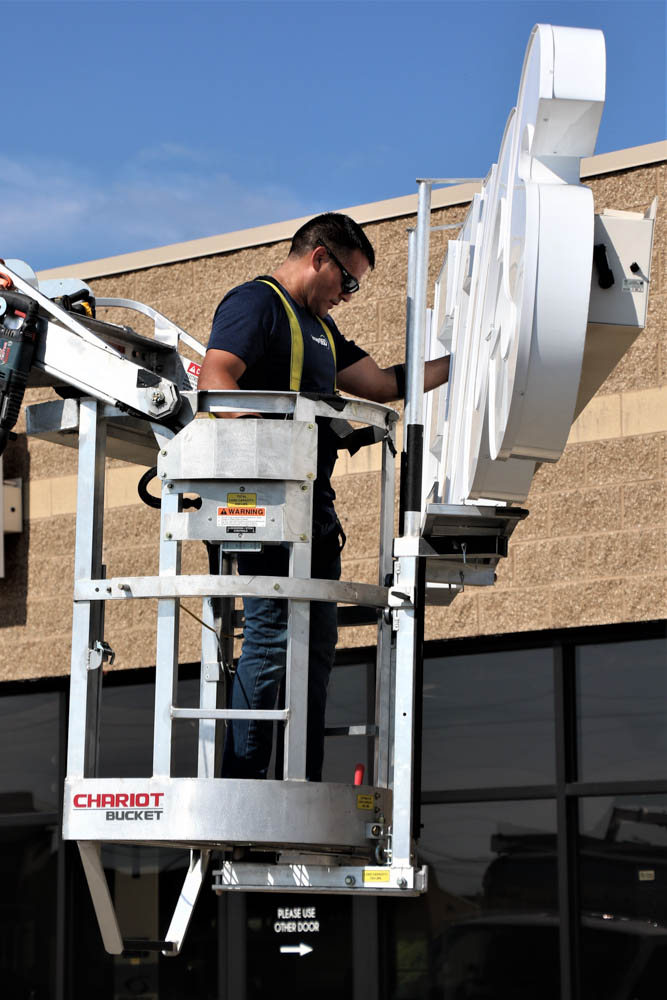
When the team built the prototype, one of our fabricators stared at it for a while, then grabbed two 50 lb. weights and leaned them against bucket.

He stepped back and yelled across the shop floor:

“Look guys—it’s Roman chariot!”

The name stuck.

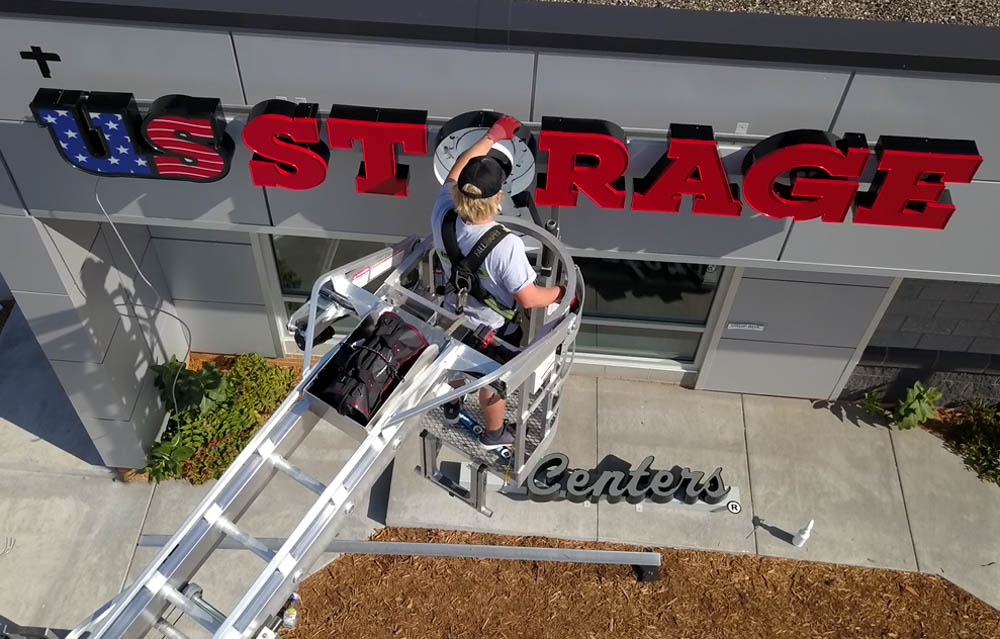
And the Chariot Bucket was born.

Field Testing Changed Everything

When we brought the Chariot prototype to installers, we wanted honest feedback.

What we heard surprised us.

Installers actually preferred rotating the sign itself rather than rotating the bucket hydraulically.

Why?

Precision.

Hydraulic bucket rotation can be jerky. But rotating a sign manually allows installers to move it a fraction of an inch at a time.

That level of control matters when you’re working with delicate signs next to expensive buildings.

The Chariot concept solved a real problem—and installers loved it.

A Whole Ecosystem of Installation Tools

Once the Chariot Bucket existed, new ideas started flowing.

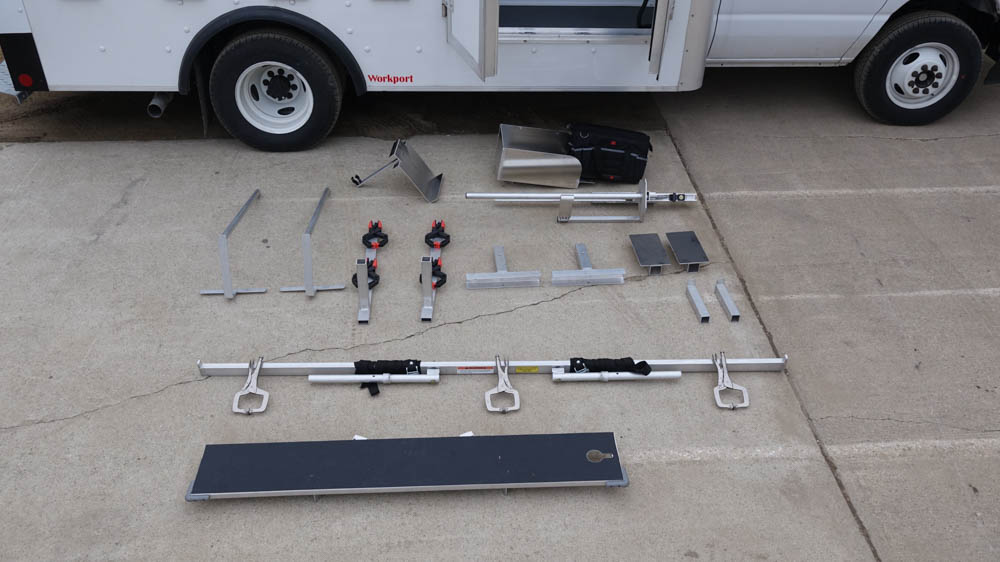
Installers inspired an entire system of attachable accessories designed to make installations faster and easier:

  • Lower forks for tall signs
  • Mid forks for medium signs
  • Upper forks for raceway signs
  • A jib attachment for top-lifted signs
  • Banner spindles
  • Pattern arms to hang channel letter templates
  • Face bars for flex faces
  • Project bags for tools, sign letters, and materials

Instead of a simple bucket, the system became a mobile installation platform, a one-man aerial workshop

Industry Recognition

The innovation didn’t go unnoticed.

At the International Sign Association Expo 2020, the Chariot Bucket earned the industry’s prestigious ISA Innovation Award.

And it arrived at the perfect moment.

Modern signs are dramatically lighter than they were twenty years ago.

Advances in LED technology and lighter cabinet materials mean that signs that once weighed 500 pounds now weigh closer to 130.

Today, many sign companies estimate that:

  • 70% of the signs they install weigh under 200 pounds
  • Most installations occur below 45 feet

That means the massive trucks and two-person buckets of the past are often unnecessary.

With the Chariot system and its accessories, one installer can now handle many installations that previously required two people.

The second crew member can stay on the ground preparing the next task instead of standing in a bucket holding a sign.

That’s a big shift in efficiency.

So Why Change the Name Now?

When Dave Peterson acquired the company in 1997, he essentially restarted a product that had been sitting in storage.

Since then, nearly every part of the design has evolved.

  • The lift system changed from cable to hydraulic.
  • The chassis platform changed completely.
  • The bucket became the Chariot system.
  • Accessories transformed installation capabilities.
  • Reliability improved dramatically.
  • And today we offer an industry-leading five-year standard warranty, compared with the two-year standard offered by many competitors.

In other words, the product today barely resembles the Van Ladder that came out of mothballs nearly 30 years ago.

It has grown into something entirely new.

So the name should reflect that.

A Question We Still Get

Some customers ask:

“If you don’t climb the ladder anymore, why keep the ladder design at all?”

Great question.

The answer comes down to physics.

To achieve a 45-foot working height on a smaller chassis, we build our lift from aluminum rather than steel.

To get the necessary strength from aluminum, the structure must be built as a truss—which essentially looks like a ladder.

From an engineering standpoint, it’s the best design.

And it comes with a bonus.

If a mechanical failure ever occurred, the ladder provides a safe emergency exit from the bucket.

Walking down a ladder beats sliding down a steel post any day.

The Next Chapter

For almost thirty years, we’ve been refining this equipment one improvement at a time.

Listening to operators.

Solving real problems.

And relentlessly pursuing excellence.

Today the Chariot Bucket has become the defining feature of our trucks.

So it only makes sense that our name reflects what the product has become.

Van Ladder Bucket Trucks is becoming Chariot Bucket Trucks.

Same people.

Same culture.

Same commitment to our customers.

Just a name that finally matches the innovation behind the machine.