
Prime Sign Installation—Finding Their Missing Tool
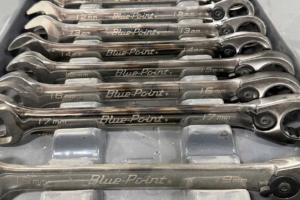
When he finally picked up the phone to buy his next truck, the decision had already been made. You see, Cody Jarrell was missing a tool, and we all know how frustrating that can be…
“I already knew the price,” he said. “I had my pre-approval. I wasn’t shopping around—I knew what I wanted.”
That clarity didn’t come overnight. It was the result of years spent learning the trade from the ground up—starting with almost no experience, figuring things out job by job, and eventually building a thriving installation company along the way.
This is the story of how one installer grew into a business owner—and how the right equipment helped him scale smarter.
Starting with Nothing—but Willing to Learn
Cody’s journey into the sign industry wasn’t planned.
Originally from Ohio, he moved to Jacksonville after getting married, searching for something more than just another job. He wanted a career—something he could grow into.
“I had my CDL, but I didn’t know anything about crane trucks. Nothing about electricity. I’d never even put a wire nut on before.”
What he did have was a background in construction and a willingness to learn. That—and the appeal of becoming a true “jack-of-all-trades”—drew him in.
It didn’t take long before the work clicked.
“I just fell in love with it. I like the fast-paced environment. Being on a different job every day.”
That variety became more than just a preference—it became the foundation for his growth.
Becoming a Problem Solver
Early on, he wouldn’t have described himself as a problem solver. But the nature of the work changed that.
“When I started, I wouldn’t say I was a problem solver at all. But after thousands of jobs… you naturally become one.”
Every job site brought a new challenge. Different buildings, different constraints, different surprises. Over time, those challenges sharpened his instincts.
A big part of that growth came from strong mentorship.
“The guy who trained me had 40 years of experience. He wouldn’t just give you the answer—he made you think through it. That’s what really developed the skill.”
Even today, that mindset sticks.
“I still get humbled. I’m not afraid to pick up the phone and call someone if there’s a better way.”
Taking the Leap into Business Ownership
Like many in the industry, entrepreneurship wasn’t the original plan.
“I always wanted to start a business, but I didn’t think I had the skill. I thought you had to be a full manufacturing company.”
That changed when he started talking to subcontractors—small crews doing installation work for larger sign companies. It opened his eyes to a different path.
So he took the leap.
“I bought a cheap truck, parked it in my driveway, and started calling local companies.”
The early days were slow. A few customers. A lot of hustle. But momentum built.
His reputation grew. He networked. He posted consistently online. Eventually, he hired his first employee—someone he had worked with before.
From there, things accelerated:
- From a driveway → to a storage unit
- From a storage unit → to a leased property
- From two employees → to seven overnight after acquiring an installation division
Today, his team includes a mix of experienced installers, including retired Navy personnel who bring discipline and flexibility to the operation.
And, in a full-circle moment, his wife joined the business too.
“I was always calling her for help. One day she was having a rough day at work, and I said, ‘I can fix some of those problems.’ So she came over—and it’s been great ever since.”
The Reality of Installation Work
Unlike manufacturers, installation companies deal with a unique challenge: they don’t control what they install.
“Sometimes it’s not built to spec. Sometimes it’s built for one scenario, and it doesn’t match the field conditions.”
That means adapting—on the fly.
“We’ll fabricate on-site, tweak things, or bring it back to the shop. And sometimes, yeah, we have to send it back. But usually we can make it work.”
It’s just another example of why problem-solving isn’t optional in this business—it’s essential.
Hitting a Growth Ceiling
As the company grew, new challenges emerged.
They had the work. They had the trucks—multiple 65-foot units and a 48’ articulating boom. But they were running into a different kind of bottleneck:
Efficiency.
“We were tying up big trucks on small jobs—surveys, low signs, quick service calls. It just didn’t make sense.”
On top of that:
- CDL driver availability was limited
- Small job sites made maneuvering large trucks difficult
- Routine work was consuming high-value equipment
He didn’t need more capacity—he needed smarter capacity.
The Shift to Efficiency
That’s what led him to invest in Van Ladder’s Chariot Bucket Truck.
What stood out immediately wasn’t just capability—it was convenience.
“Anyone can drive it. It’s quick to set up. Flip the switch, parking brake, throw a couple cones out—you’re ready.”
The impact was immediate:
- Faster surveys
- More efficient service calls
- Less strain on larger trucks
- Ability to arrive onsite fully stocked
- Reduced dependency on CDL drivers
“It’s the most efficient truck we have for the type of work I send it on.”
A True Support Vehicle
Rather than replacing larger trucks, the new addition carved out its own role.
“It’s really a hybrid—service, surveys, and support.”
That shift unlocked new opportunities.
“It’s allowed us to pursue multiple service contracts.”
Today, the company services:
- Over 200 gas stations
- Dozens of rental locations
- Ongoing maintenance and retrofit projects
With the right setup, crews can respond quickly—with everything they need already onboard.
“If a call comes in, we’ve got the parts. We’re ready.”
Real-World Advantages
The benefits show up most clearly in everyday situations:
Tight job sites
“I was at a strip mall—multiple stops. Being able to turn the truck off, work quietly, and move quickly—it made a huge difference.”
Limited access installs
“There are jobs where a bigger truck just wouldn’t work. I’d have to shut down a whole parking lot. With this, I didn’t.”
Long-distance efficiency
“We cover a huge area—Pensacola to Savannah to Orlando. I don’t need to send a big truck for a survey.”
Speed and organization
“I can load everything in minutes, drive out, and not have to come down from the basket once I’m up.”
Built for Real Work
It’s not just about mobility—it’s about how the truck supports the work itself.
From organized storage to basket layout, everything is designed to reduce friction.
“I keep my drill on one side of the bucket tool tray, impact on the other, hardware in the middle. Everything’s right there. I always have a free hand.”
Even small features make a difference:
- Project bags reduce trips up and down
- Storage keeps tools dry and organized
- Attachments simplify installs
“I’ll be up there sometimes thinking—‘There’s an attachment for this.’ I just forget because I’m used to doing it the hard way.”
Confidence in the Field
Like any new piece of equipment, there’s an adjustment period.
But that didn’t last long.
“I’ve put that truck in every position you can think of—ditches, tight angles, full extension—and it’s handled it.”
Even support has been seamless.
“I called once. They solved it in 30 seconds.”
A Tool That Pays for Itself
At the end of the day, the decision comes down to ROI.
“That truck makes a lot of money. It’s very profitable for us.”
By:
- Reducing wear on larger trucks
- Expanding service capacity
- Increasing daily efficiency
…it quickly became an essential part of the operation.
“It’s taken a lot of pressure off me.”
Advice for the Next Generation
For those just entering the industry, his advice is simple:
“Keep pursuing it. The industry is way bigger than you think.”
He encourages new installers to:
- Get outside their local bubble
- Attend trade shows and events
- Talk to people across the industry
“There are so many opportunities—but you have to go after them.”
And perhaps most importantly:
“Your first plan probably won’t work. That’s just part of the job.”
Looking Ahead
Today, his company sits at a comfortable and sustainable size—around eight to nine employees—with room to grow if the right opportunities come along. Cody has also purchased the property where his business resides, and plans to add more indoor space for his trucks, shop, offices, etc.
“I’d be happy staying this size. I’d also be happy growing to five or six million. We’ll see what’s in the cards.”
That mindset reflects the journey itself—steady, open, and grounded.
“I’m not trying to force anything. I’m grateful for what we have.”
From Driveway to Direction
What started as a single truck in a driveway has become a growing, capable business—built on hard-earned skills, strong relationships, and a willingness to adapt.
And somewhere along the way, the guy who “wasn’t a problem solver” became exactly that.
Not because it came naturally.
But because the job demanded it—and he rose to meet it.

